

How to Set Up a Functional Home Office as a Parent — Practical Tips for Productivity and Family Balance

You can create a functional home office that fits family life without sacrificing focus or flexibility. Carve out a dedicated workspace, set clear boundaries with your household, and stock it with ergonomic, multiuse gear to work efficiently while parenting.
They will learn practical layout choices, time-blocking tactics, and kid-friendly storage that reduce interruptions and make work predictable. Short, actionable adjustments let you balance calls, deadlines, and caregiving with less stress and more consistent productivity.
Essential Steps to Set Up a Functional Home Office as a Parent
A practical home workspace balances ergonomics, storage, lighting, child safety, and clear boundaries to protect focus and family time. The following steps explain where to place the home office, what furniture and lighting to choose, how to organise and childproof, and how to set clear routines and personal touches that aid productivity.
Choosing the Optimal Location for Your Home Workspace
Select a location with steady natural light and minimal foot traffic—an unused guest room, a corner of the living room away from the main walkway, or a quiet area near a window in the bedroom works well. Prioritise a wall or corner where a desk can face the room entrance; this reduces startle reflexes during virtual meetings and helps supervise kids if the space is shared.
Avoid placing the desk directly in high-traffic zones like the kitchen doorway or hallway. If only open-plan space is available, use a tall bookcase or a room divider to create visual separation and reduce distractions. Check Wi‑Fi strength in the chosen spot and, if weak, plan for a mesh node or Ethernet drop.
Furnishing Your Home Office for Comfort and Productivity
Choose ergonomic furniture with adjustable features: a sit-stand desk and an ergonomic chair with lumbar support and adjustable armrests significantly reduce back and neck strain. Match desk height to forearm level when typing—usually 28–30 inches for adults, but adjustable desks remove guesswork for shared seating.
Keep essential office furniture compact but functional: a narrow desk with cable management, a small filing cabinet on casters, and a monitor arm to free desk surface. Prioritise durable materials that resist spills and fingerprints. For dual-use spaces, buy furniture that tucks away—folding desks or mobile pedestals help convert rooms quickly back to family use.
Lighting Strategies for Reducing Eye Strain and Boosting Mood
Maximise natural lighting by positioning the desk perpendicular to a window to avoid glare on screens while bathing the workspace in daylight. Use sheer curtains or adjustable blinds to control direct sun and reduce reflections during afternoon work.
Supplement with layered artificial light: a bright overhead fixture for ambient light plus a task lighting solution like an adjustable LED desk lamp with colour temperature control. Aim for 4000K for balanced daytime work; dimmable lamps help during early mornings or evenings. Place light sources to the side opposite the dominant hand to minimise cast shadows when writing.
Organising and Storage Solutions for a Tidy Work Environment
Adopt a tiered storage system: daily-use items live in desk drawers or desktop organisers, weekly items go in a nearby shelf, and archival documents move to labelled boxes or a filing system. Use clear bins and labelled magazine files for quick visual identification of school papers, invoices, and receipts.
Install vertical storage—wall shelves or pegboards—to save floor space and keep toys or kid supplies off the desk. Use a rolling cart as mobile storage for chargers, notebooks, and art supplies that can be wheeled away during meetings. Implement a short weekly purge—discard, file, or scan—so clutter never accumulates.
Creating Kid-Friendly Zones and Ensuring Safety
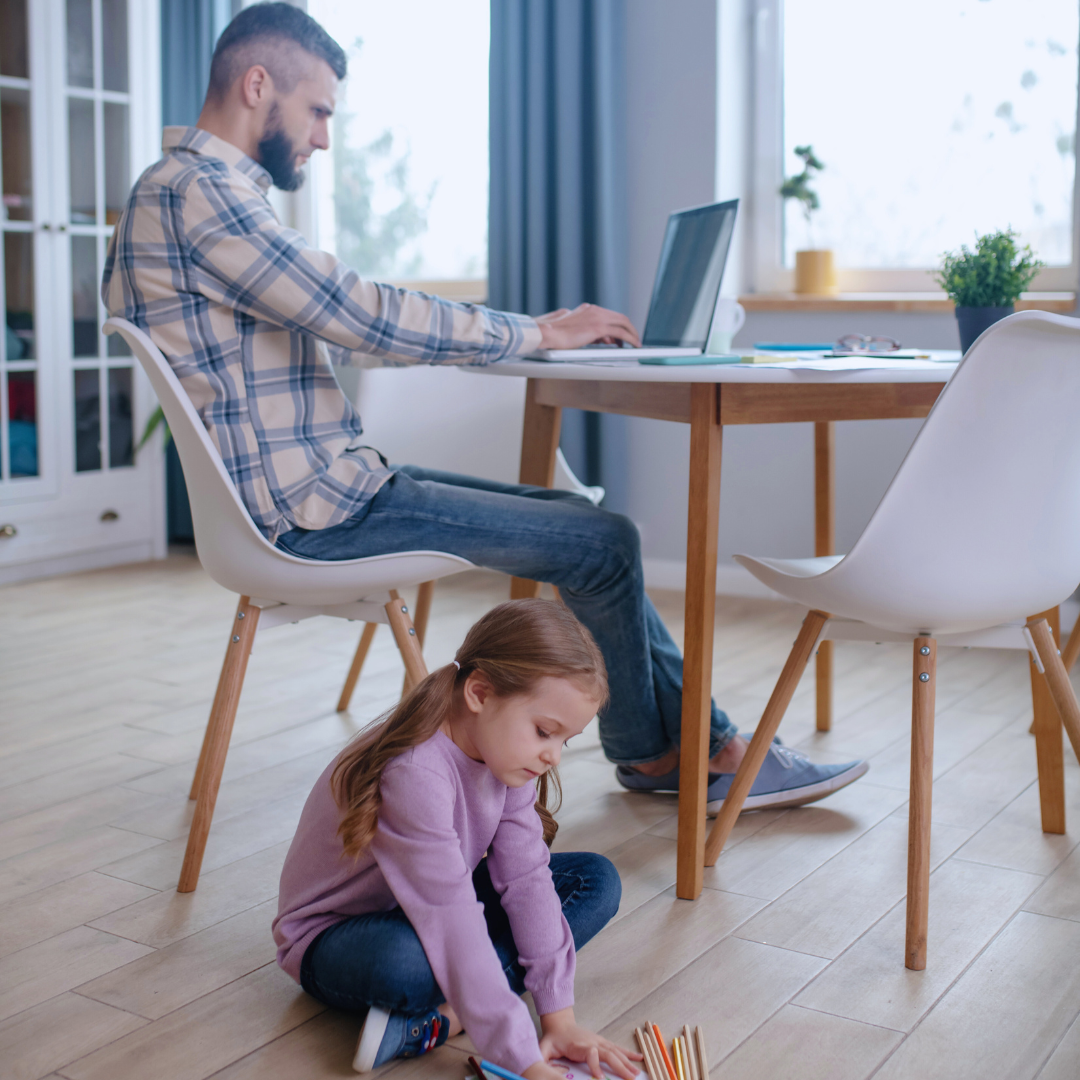
Designate a supervised play station within sight—an adjacent table with a toy bin, books, and quiet activities keeps children engaged during short work blocks. Stock the zone with low-cost, rotation-based toys and a labelled craft box to maintain novelty without overwhelming the space.
Childproof the office: secure tall bookcases to studs, use outlet covers, route cords through cable channels, and mount heavy equipment away from edges. If screens and electronics sit low, place furniture anchors and consider a lockable cabinet for sharp items and important documents. Teach simple safety rules and use a visual schedule so kids know when quiet time is expected.
Setting Boundaries to Minimise Distractions and Balance Work-Family Life
Create clear, visible signals for availability—use a colored card on the desk or a small flag system to show when meetings are on, and interruptions should be minimised. Set predictable blocks: batch-focused work for school hours and family-friendly tasks in early evenings.
Establish routines to transition in and out of work: a 5-minute tidy and a short walk after closing the laptop help mentally shift to family mode. Communicate boundaries to partners and caregivers—agree on backup childcare plans for unavoidable calls. Use noise‑cancelling headphones during critical work and block distracting apps with site timers when deep focus is required.
Personalising Decor to Enhance Motivation and Wellbeing
Choose a restrained colour palette and a few meaningful items—family photos, a small plant, or an art print—to personalise the space without cluttering it. Plants like pothos or snake plant improve air quality and require minimal care, contributing to a calmer atmosphere.
Add functional decor that supports routine: a wall calendar for school schedules, a whiteboard for daily priorities, and a dedicated charging station for devices. Keep decor modular so it can shift with seasonal needs or when the workspace must accommodate children for homework or crafts.